
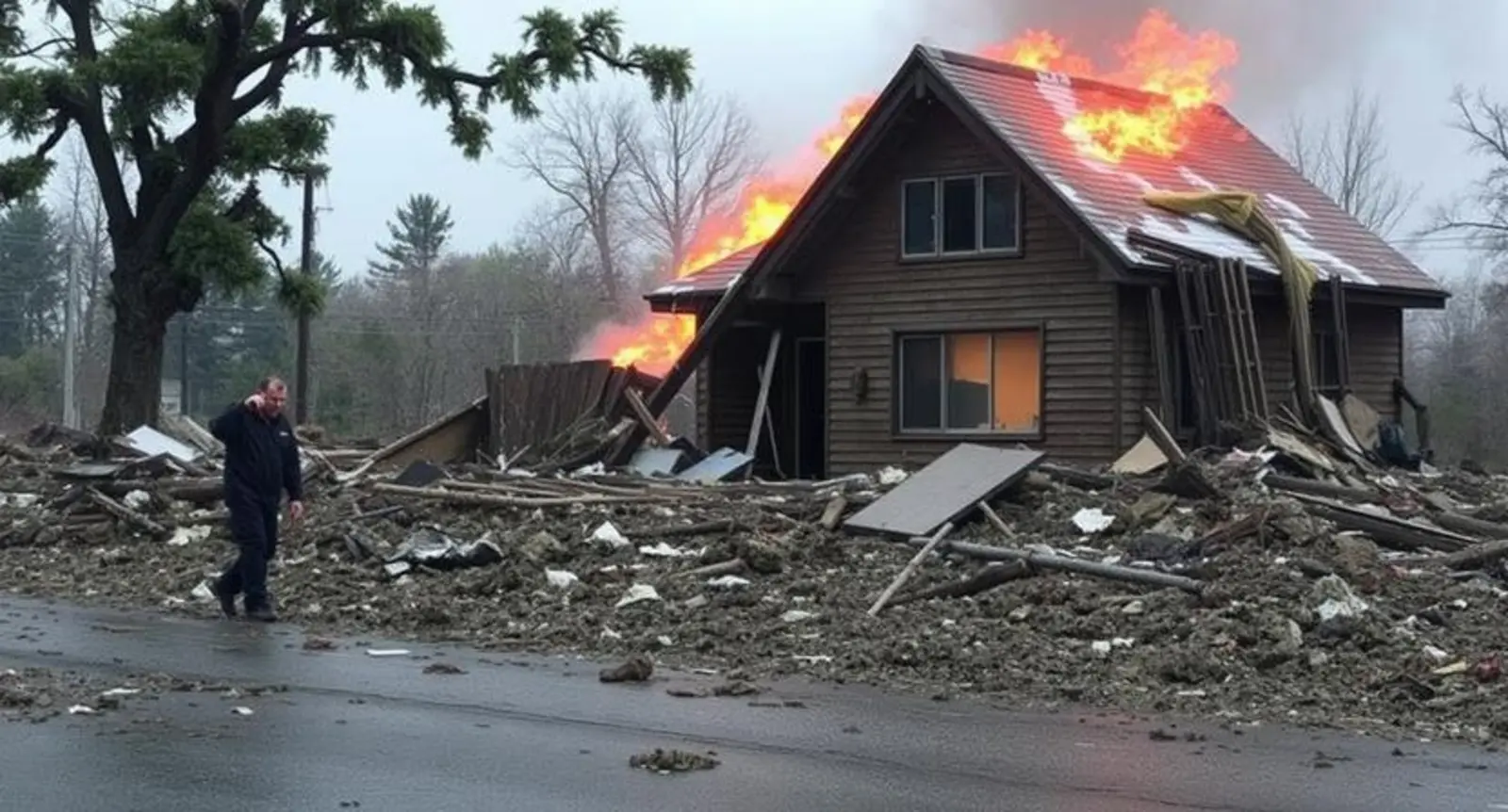
If you’re looking for a devastation synonym, the best choice depends on what you mean: severe physical destruction, overwhelming emotional pain, economic damage, or complete ruin.
Common alternatives include destruction, ruin, destruction, desolation, wreckage, catastrophe, devastation, heartbreak, despair, and misery, but each carries a different shade of meaning.
Quick Answer: What Is a Synonym for Devastation?
The most useful synonyms for devastation are:
- Destruction — severe physical or structural damage
- Ruin — a state of being destroyed or seriously damaged
- Desolation — complete emptiness, sadness, or abandonment
- Wreckage — the remains left after something has been destroyed
- Catastrophe — a disastrous event with serious consequences
- Destruction — the act or result of destroying something
- Damage — harm or impairment, usually less intense
- Calamity — a serious event causing widespread distress
- Chaos — extreme disorder following a destructive event
- Heartbreak — intense emotional suffering
- Despair — a profound loss of hope
- Misery — severe unhappiness or suffering
The strongest general replacement for devastation is usually destruction when discussing physical damage, while heartbreak, despair, or desolation work better for emotional devastation.
What Does “Devastation” Mean?
Devastation is the state or result of something being completely or severely destroyed, damaged, or emotionally overwhelmed.
The word can describe both physical and emotional experiences.
For example:
- “The hurricane caused widespread devastation.”
- “She felt deep devastation after losing someone she loved.”
The noun devastation comes from devastate, meaning to destroy something severely or leave someone emotionally overwhelmed.
Pronunciation
Devastation is pronounced approximately:
dev-uh-STAY-shun
Its stress falls on the third syllable: STAY.
Word Forms
| Word | Part of Speech | Example |
| devastate | Verb | The storm devastated the town. |
| devastated | Adjective | The family was devastated. |
| devastating | Adjective | It was a devastating loss. |
| devastation | Noun | The earthquake caused devastation. |
Devastation Synonyms by Meaning
Not every synonym for devastation can replace the word naturally. The most effective approach is to identify the meaning first, then select the word that matches its emotional intensity and context.
1. Physical Destruction
Use these when something has been badly damaged or destroyed:
- Destruction
- Ruin
- Wreckage
- Damage
- Desolation
- Dismantling
- Collapse
- Destruction
- Decimation
- Ravage
Example:
“The wildfire left widespread devastation across the region.”
Possible replacements:
- “The wildfire caused widespread destruction.”
- “The wildfire left enormous damage behind.”
- “The wildfire left the landscape in ruin.”
Best choice: Destruction is generally the closest neutral alternative.
2. Emotional Devastation
When devastation describes grief, heartbreak, shock, or emotional suffering, different vocabulary is more natural.
Useful alternatives include:
- Heartbreak
- Despair
- Anguish
- Grief
- Sorrow
- Misery
- Agony
- Desolation
- Distress
- Despondency
Example:
“She was overcome with devastation after the loss.”
Depending on the intended meaning:
- Heartbreak emphasizes emotional pain.
- Grief emphasizes sorrow after loss.
- Anguish emphasizes intense psychological suffering.
- Despair emphasizes loss of hope.
- Desolation emphasizes profound loneliness or emptiness.
Devastation Synonym Intensity Scale
One useful way to choose the right word is to think of synonyms as a vocabulary ladder rather than interchangeable words.
| Intensity | Word | Typical Meaning |
| Low | Damage | Some degree of harm |
| Low–Medium | Distress | Emotional or mental suffering |
| Medium | Harm | General negative effect |
| Medium | Ruin | Serious deterioration |
| Medium–High | Destruction | Severe physical damage |
| High | Desolation | Extreme emptiness or devastation |
| High | Anguish | Intense emotional suffering |
| Very High | Devastation | Overwhelming destruction or emotional impact |
| Very High | Catastrophe | Disaster with major consequences |
| Very High | Despair | Extreme hopelessness |
This scale helps prevent a common writing problem: using an overly dramatic synonym when a simpler word would communicate the idea better.
Devastation vs. Destruction
Devastation and destruction are closely related, but they are not identical.
Destruction focuses primarily on the act or result of destroying something.
Devastation often emphasizes the scale, severity, or overwhelming consequences of that destruction.
Compare:
“The fire caused destruction.”
This simply tells us that something was destroyed.
“The fire caused widespread devastation.”
This suggests extensive damage and serious consequences.
Best rule
Use destruction for straightforward factual writing.
Use devastation when you want to emphasize the magnitude or emotional impact of the damage.
Devastation vs. Ruin
Ruin can describe something that has deteriorated so severely that it can no longer function or succeed normally.
Examples:
- “The abandoned building fell into ruin.”
- “The scandal ruined his reputation.”
Unlike devastation, ruin can also describe an individual’s prospects, reputation, finances, or plans.
Quick distinction
- Devastation: overwhelming destruction or emotional impact
- Ruin: severe deterioration, failure, or destruction
- Destruction: the act or result of destroying
Devastation vs. Desolation
These words are especially close in literary writing.
Desolation often combines physical emptiness with emotional sadness.
For example:
“The abandoned village was filled with desolation.”
The word can suggest a place that is empty, bleak, lonely, and lifeless.
Devastation, on the other hand, emphasizes severe damage or overwhelming emotional impact.
Choose:
Devastation → severe destruction or emotional shock
Desolation → emptiness, loneliness, bleakness, or abandonment
Devastation vs. Catastrophe
A catastrophe is usually an event that causes terrible consequences.
A devastation is more often the result or condition created by such an event.
For example:
“The earthquake was a catastrophe.”
“The earthquake caused widespread devastation.”
This distinction is important in professional and academic writing.
Catastrophe = disastrous event
Devastation = severe damage or consequences
Best Devastation Synonyms for Different Contexts
| Context | Best Synonym | Why |
| Natural disaster | Destruction | Clear and factual |
| War | Destruction | Common and direct |
| Buildings | Ruin | Highlights severe deterioration |
| Emotional loss | Grief | Natural for bereavement |
| Romantic loss | Heartbreak | Personal and emotional |
| Mental suffering | Anguish | Strong emotional pain |
| Loss of hope | Despair | Focuses on hopelessness |
| Abandoned place | Desolation | Suggests emptiness |
| Disaster event | Catastrophe | Describes the event |
| Physical remains | Wreckage | Refers to destroyed remains |
| Financial damage | Ruin | Strong for serious financial consequences |
| Academic writing | Destruction | Precise and neutral |
| Creative writing | Desolation | Evocative and atmospheric |
| Journalism | Devastation | Strong but widely understood |
| Casual conversation | Damage | Simple and natural |
Devastation Synonyms for Professional Writing
Professional writing generally benefits from precise, restrained vocabulary.
Instead of repeatedly using devastation, consider:
- Destruction
- Damage
- Loss
- Disruption
- Deterioration
- Economic harm
- Severe impact
- Adverse consequences
- Significant losses
Example
Less precise:
“The policy caused devastation to the industry.”
More professional:
“The policy caused significant disruption and financial losses across the industry.”
The second sentence provides more useful information because it explains what kind of harm occurred.
Devastation Synonyms for Academic Writing
Academic writing usually favors objective terminology.
Good alternatives include:
- Destruction
- Severe damage
- Adverse effects
- Negative consequences
- Widespread loss
- Social disruption
- Environmental degradation
- Structural damage
Avoid replacing devastation with highly emotional terms such as agony or misery unless the research specifically concerns emotional experience.
Example
“The conflict resulted in widespread infrastructure destruction and population displacement.”
This is generally more academically precise than:
“The conflict caused tremendous devastation.”
Devastation Synonyms for Creative Writing
Creative writing allows more expressive vocabulary.
Strong literary alternatives include:
- Desolation
- Ruin
- Wreckage
- Anguish
- Despair
- Desolation
- Grief
- Sorrow
- Misery
- Ruination
Example
“He stood among the wreckage, unable to comprehend the devastation around him.”
A more literary version might be:
“He stood among the ruins, surrounded by an overwhelming silence of desolation.”
The second version creates a stronger atmosphere rather than simply stating that destruction occurred.
Common Collocations With “Devastation”
Natural collocations make your writing sound fluent.
Common combinations include:
- widespread devastation
- complete devastation
- massive devastation
- catastrophic devastation
- emotional devastation
- environmental devastation
- economic devastation
- widespread destruction
- devastating loss
- devastating impact
- devastating consequences
- devastating effects
- devastating blow
- devastating news
Example Sentences
- “The hurricane caused widespread devastation.”
- “The community experienced economic devastation.”
- “The announcement came as a devastating blow.”
- “The accident had a devastating impact on the family.”
Grammar: How to Use “Devastation” Correctly
Devastation is primarily an uncountable noun.
Natural:
“The storm caused widespread devastation.”
Less natural:
“The storm caused a devastation.”
Usually, say:
- widespread devastation
- immense devastation
- considerable devastation
- environmental devastation
- emotional devastation
The related adjective devastating is also extremely common.
“It was a devastating experience.”
The verb devastate takes an object:
“The earthquake devastated the region.”
Common Mistakes With Devastation Synonyms
Mistake 1: Treating Every Synonym as Identical
Words such as destruction, ruin, grief, despair, and devastation overlap but have different meanings.
Better approach: identify whether you’re describing physical damage, emotional suffering, hopelessness, or a disastrous event.
Mistake 2: Using “Catastrophe” for the Result
A catastrophe normally refers to the disastrous event, while devastation often refers to its effect or aftermath.
Mistake 3: Overusing Dramatic Vocabulary
Replacing every instance of “damage” with “devastation” can make writing sound exaggerated.
Use the strongest word that is genuinely accurate.
Mistake 4: Confusing “Devastated” With “Destroyed”
Destroyed usually describes a thing.
Devastated can describe both a place and a person’s emotional state.
“The village was devastated.”
“She was devastated by the news.”
A Simple Decision Tree for Choosing a Devastation Synonym
Ask yourself these four questions:
1. Am I describing physical damage?
→ Use destruction, damage, ruin, wreckage, or devastation.
2. Am I describing emotional pain?
→ Use grief, heartbreak, anguish, sorrow, or devastation.
3. Am I describing hopelessness?
→ Use despair or despondency.
4. Am I describing a disastrous event?
→ Use catastrophe, calamity, or disaster.
This approach is more reliable than selecting a synonym simply because it appears in a thesaurus.
Related Words and Semantic Field
The lexical field surrounding devastation includes several related concepts.
Destruction Words
- destruction
- ruin
- wreckage
- damage
- collapse
- demolition
- ravage
- decimation
Emotional Words
- grief
- sorrow
- heartbreak
- anguish
- despair
- misery
- distress
- agony
Disaster Words
- catastrophe
- calamity
- disaster
- tragedy
- crisis
- misfortune
Recovery-Related Words
- rebuilding
- restoration
- recovery
- healing
- renewal
- reconstruction
- resilience
These relationships are useful when building vocabulary because they help you understand how words connect conceptually, rather than memorizing isolated lists.
Antonyms of Devastation
The opposite of devastation depends on its meaning.
For physical destruction, useful antonyms include:
- Restoration
- Reconstruction
- Preservation
- Protection
- Stability
- Repair
For emotional devastation:
- Happiness
- Hope
- Joy
- Comfort
- Relief
- Peace
- Contentment
For environmental devastation:
- Conservation
- Restoration
- Renewal
- Sustainability
Example
“The region moved from devastation to reconstruction.”
This creates a natural semantic contrast between destruction and recovery.
How to Choose the Best Devastation Synonym
The best synonym depends on four factors:
Meaning
Ask exactly what is being damaged: a building, community, reputation, economy, relationship, or emotional state.
Intensity
Choose damage for moderate harm and devastation or destruction for severe harm.
Register
Use destruction and damage in professional writing. Use desolation, anguish, and sorrow when a literary or emotional tone is appropriate.
Audience
A general audience usually benefits from familiar words. Specialized or academic readers may prefer precise terminology.
A useful editing principle is:
Choose the word that adds the most meaning, not the word that sounds the most impressive.
Frequently Asked Questions About Devastation Synonyms
What is the closest synonym for devastation?
Destruction is generally the closest synonym when devastation refers to severe physical damage. For emotional devastation, despair, heartbreak, grief, or anguish may be more appropriate.
What is a stronger word than devastation?
Depending on the context, destruction, desolation, catastrophe, ruination, or annihilation can communicate extreme severity. However, they are not interchangeable in every sentence.
What is a synonym for emotional devastation?
Common choices include heartbreak, grief, anguish, despair, sorrow, misery, and desolation. The best option depends on whether the emphasis is on loss, pain, hopelessness, or loneliness.
What is the difference between devastation and destruction?
Destruction focuses on something being destroyed, while devastation often emphasizes the scale or overwhelming consequences of that destruction.
What is the difference between devastation and despair?
Devastation can describe severe physical destruction or intense emotional impact. Despair specifically refers to a profound loss of hope.
What is a synonym for devastation in formal writing?
For formal or academic writing, destruction, severe damage, widespread loss, adverse effects, deterioration, and significant disruption are often more precise.
What is the opposite of devastation?
Depending on context, antonyms include restoration, reconstruction, recovery, preservation, healing, hope, peace, and renewal.
Final Vocabulary Guide
The word devastation is powerful because it can describe both physical destruction and profound emotional suffering. But its synonyms should not be treated as interchangeable.
Use destruction for severe physical damage, ruin for serious deterioration or failure, wreckage for destroyed remains, desolation for bleak emptiness, catastrophe for a disastrous event, heartbreak for emotional loss, anguish for intense suffering, and despair for profound hopelessness.
For the most natural writing, always consider meaning, intensity, register, audience, and context before replacing “devastation.”
The strongest vocabulary is not necessarily the most dramatic vocabulary. It is the vocabulary that communicates your exact meaning with the greatest clarity and precision.