
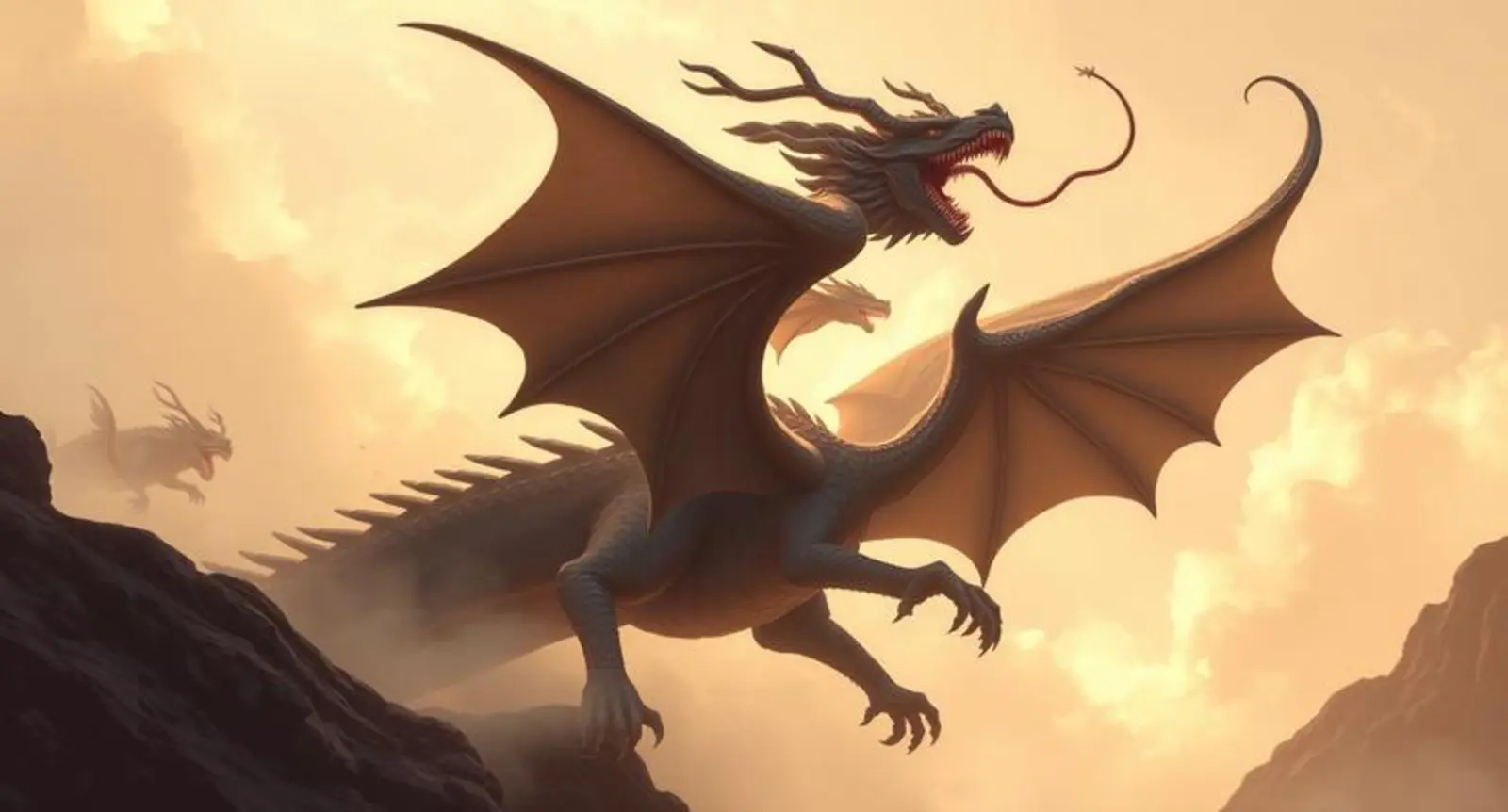
If you are looking for a dragon synonym, the best choice depends on what you mean by dragon. A dragon can refer to a mythical creature, a powerful or frightening person, a harsh woman, or a symbol of strength, danger, wisdom, and transformation. Because of these different meanings, there is no single perfect synonym for dragon.
For a mythical creature, alternatives such as wyrm, drake, serpent, wyvern, beast, monster, and mythical creature may work, although they are not always exact equivalents. In figurative language, words such as beast, tyrant, monster, firebrand, or formidable opponent can sometimes capture the intended meaning.
This guide explains the differences between these words so you can choose the most natural alternative for creative writing, fantasy fiction, academic writing, descriptions, storytelling, or everyday communication.
Quick Answer: What Is a Synonym for Dragon?
Common dragon synonyms and related words include:
- Wyrm — an archaic or literary word for a dragon or serpent-like creature.
- Drake — traditionally a dragon, often associated with a smaller or specific type of dragon.
- Wyvern — a legendary winged creature traditionally depicted with two legs and a dragon-like body.
- Serpent — a snake-like creature; sometimes used poetically for a dragon.
- Beast — a broad word emphasizing the creature’s wild or dangerous nature.
- Monster — emphasizes fear, danger, or unnatural qualities.
- Mythical creature — a neutral descriptive phrase.
- Fire-breather — an informal descriptive expression emphasizing a dragon’s ability to breathe fire.
- Wyrmkin — a fantasy-style term referring to a dragon or dragon-like being.
- Draconian creature — a formal or fantasy-oriented description related to dragons.
Important: Not all of these are true dictionary-equivalent synonyms. Some are near-synonyms, subtypes, descriptive alternatives, or context-dependent substitutes.
What Does Dragon Mean?
A dragon is traditionally a legendary or mythical creature, usually represented as a large reptile or serpent-like being with extraordinary powers. In Western traditions, dragons are often depicted with wings, claws, scales, and the ability to breathe fire. In many Eastern traditions, especially Chinese mythology, dragons have different physical characteristics and may symbolize wisdom, prosperity, power, rain, or good fortune.
The word can also be used figuratively.
For example:
The ruthless manager was a dragon in the workplace.
Here, dragon does not describe a literal creature. It describes someone perceived as fierce, intimidating, demanding, or difficult to deal with.
This distinction matters when selecting a synonym.
Dragon Synonym Hierarchy
A useful way to understand dragon-related vocabulary is to place alternatives on a semantic hierarchy.
| Word | Relationship to “dragon” | Tone | Best Use |
| Wyrm | Close literary equivalent | Ancient, mythical | Fantasy, literature |
| Drake | Dragon-related term | Traditional, fantasy | Fantasy fiction |
| Wyvern | Dragon-like creature/subtype | Mythical, specific | Fantasy, mythology |
| Serpent | Related creature | Mysterious, poetic | Literature |
| Beast | Broad substitute | Wild, powerful | Fiction, description |
| Monster | Broad substitute | Frightening | Horror, fantasy |
| Mythical creature | Descriptive alternative | Neutral | Academic/general writing |
| Fire-breather | Descriptive phrase | Dramatic | Fantasy, storytelling |
| Leviathan | Figurative related term | Grand, powerful | Literary writing |
| Creature | Very broad alternative | Neutral | General description |
This hierarchy shows why replacing dragon with any random synonym can change the meaning.
Wyrm as a Dragon Synonym
Wyrm is one of the strongest literary alternatives to dragon.
Historically, wyrm referred to a serpent or dragon-like creature. Modern fantasy writing often uses the word to create an ancient, mysterious, or legendary atmosphere.
Tone
Ancient, mythical, ominous, literary
Best contexts
Use wyrm in:
- Fantasy novels
- Medieval-inspired fiction
- Mythology
- Poetry
- Role-playing games
- Epic storytelling
Example
The ancient wyrm slept beneath the ruined mountain.
Compare this with:
The ancient dragon slept beneath the ruined mountain.
Dragon sounds familiar and direct. Wyrm creates a more archaic and mysterious feeling.
Common combinations
- ancient wyrm
- great wyrm
- fire wyrm
- sea wyrm
- colossal wyrm
- legendary wyrm
Drake as a Dragon Synonym
Drake is another important dragon-related word, especially in fantasy literature.
Historically, drake can mean a dragon. In modern fantasy, however, authors may use drake to describe a particular type of dragon or dragon-like creature.
Tone
Traditional, fantasy-oriented, concise
Example
A black drake emerged from the cavern.
The word drake can make a fantasy world feel more developed because it may imply that the creature belongs to a particular species or class.
Best contexts
- Fantasy worldbuilding
- Games
- Fiction
- Mythological discussions
- Creature classification
Wyvern vs Dragon
One of the most important distinctions in dragon vocabulary is between dragon and wyvern.
A traditional European wyvern is generally depicted with:
- Two legs
- Two wings
- A long tail
- A reptilian body
Traditional dragons are often depicted with four legs and two wings, although artistic traditions vary.
Therefore, wyvern is not always a direct synonym for dragon. It is better understood as a related mythical creature or dragon-like creature.
Example
The knight battled a wyvern above the castle.
This sentence suggests a specific creature rather than a generic dragon.
Serpent as a Dragon Synonym
Serpent can sometimes replace dragon, particularly when the dragon is described as long, snake-like, aquatic, or mysterious.
However, serpent normally means a snake or snake-like creature rather than specifically a dragon.
Tone
Poetic, mysterious, ancient
Example
A golden serpent emerged from the sacred lake.
This creates a different image from:
A golden dragon emerged from the sacred lake.
The first sounds more mysterious and symbolic, while the second clearly identifies a dragon.
Best contexts
- Poetry
- Mythology
- Symbolic writing
- Fantasy
- Religious or historical discussions
Beast as a Dragon Synonym
Beast is a broad descriptive alternative.
It does not specifically mean dragon, but it can work when the emphasis is on the creature’s size, strength, wildness, or danger.
Example
The enormous beast roared from the mountain.
If the surrounding context already establishes that the creature is a dragon, beast can prevent repetitive wording.
Best contexts
- Action scenes
- Fantasy fiction
- Descriptive writing
- Informal storytelling
Emotional effect
Beast emphasizes physical power rather than mythology.
Monster as a Dragon Synonym
Monster is another broad alternative.
It works particularly well when the writer wants to emphasize that the creature is:
- terrifying
- destructive
- unnatural
- dangerous
- frightening
Example
The villagers feared the monster that lived beyond the forest.
If readers already know that the monster is a dragon, this can be an effective variation.
However, monster changes the emotional perspective. A dragon can be benevolent, wise, noble, or protective, whereas monster generally carries a negative implication.
Mythical Creature as a Neutral Alternative
For academic or explanatory writing, mythical creature is often safer than highly literary alternatives.
Example
The dragon is one of the best-known mythical creatures in world folklore.
This phrase is useful when you want to explain the category rather than create a dramatic image.
Best contexts
- Academic writing
- Educational articles
- Encyclopedic content
- General explanations
- Research writing
Fire-Breather as a Descriptive Dragon Alternative
Fire-breather is not a strict synonym, but it can be an effective descriptive phrase.
It highlights one of the most recognizable characteristics associated with many Western dragons.
Example
The fire-breather circled above the battlefield.
This creates a dramatic fantasy tone.
Other descriptive alternatives include:
- winged beast
- scaled creature
- ancient reptile
- flying beast
- legendary beast
- flame-breathing creature
- winged serpent
Dragon Synonyms by Context
The best alternative depends heavily on the purpose of your sentence.
| Context | Best Choice |
| Everyday description | creature |
| Fantasy fiction | wyrm |
| Medieval fantasy | drake |
| Specific mythical creature | wyvern |
| Poetic writing | serpent |
| Horror | monster |
| Action writing | beast |
| Academic writing | mythical creature |
| Dramatic storytelling | fire-breather |
| Ancient atmosphere | wyrm |
| Symbolic writing | serpent |
| Character insult | monster |
| Worldbuilding | drake or wyrm |
Dragon Synonym for Creative Writing
Creative writers have more freedom than academic writers.
Instead of repeatedly writing dragon, you can alternate between words that emphasize different characteristics.
For example:
The dragon descended from the clouds.
Could become:
The ancient wyrm descended from the clouds.
Or:
The enormous beast descended from the clouds.
Or:
The winged serpent descended from the clouds.
Each sentence produces a different mental image.
Writing Tip
Do not replace every occurrence of dragon with a synonym. Repetition is sometimes better than an unnatural substitute.
For example:
The dragon entered the cave. The wyrm looked around. The beast then roared.
This may sound forced if all three words refer to exactly the same creature.
A better approach is to use the alternative only when it adds meaning.
Dragon Synonym for Fantasy Fiction
Fantasy writing benefits from vocabulary that communicates worldbuilding.
Useful dragon-related terms include:
- wyrm
- drake
- wyvern
- winged serpent
- fire-breather
- ancient beast
- scaled giant
- sky beast
- flame-breathing creature
- legendary beast
You can also create fictional terminology based on your world’s internal mythology.
For example:
The villagers called the ancient dragon a sky wyrm.
This establishes that sky wyrm may be a culturally specific name within the fictional world.
Dragon Synonym for Academic Writing
Academic writing requires precision.
Avoid replacing dragon with words such as beast or monster unless you are specifically discussing those descriptions.
Better choices include:
- mythical creature
- legendary creature
- folkloric creature
- dragon-like creature
- serpentine creature
- mythological being
Example
Less precise:
Dragons are strange monsters found in old stories.
More precise:
Dragons are legendary creatures that appear in the mythology and folklore of numerous cultures.
The second sentence is more appropriate for educational writing because it avoids unnecessary emotional language.
Dragon Synonym for Literary Writing
Literary writing often benefits from connotation rather than direct substitution.
Consider these choices:
Wyrm → ancient and ominous
Serpent → mysterious and symbolic
Beast → powerful and primal
Monster → frightening and destructive
Leviathan → enormous and overwhelming
Creature → neutral and observational
The correct choice depends on what you want readers to feel.
Dragon vs Wyrm
The distinction is subtle but useful.
Dragon is the standard, widely understood term.
Wyrm feels older, more literary, and more archaic.
Use dragon when clarity matters.
Use wyrm when atmosphere matters.
Example
The dragon guarded the treasure.
Clear and straightforward.
The ancient wyrm guarded the forgotten treasure.
More atmospheric and literary.
Dragon vs Drake
Dragon is the general term.
Drake can refer to a dragon or dragon-like creature, especially in fantasy settings.
If your audience does not know the fictional classification, dragon is usually clearer.
If your story has several dragon species, drake can provide useful specificity.
Dragon vs Wyvern
These words should not always be treated as interchangeable.
A wyvern traditionally has two legs and two wings.
A dragon is often depicted with four legs and two wings in Western fantasy, although depictions differ across cultures and periods.
Therefore:
Dragon = broad category
Wyvern = specific dragon-like creature/traditional form
Dragon vs Monster
These words differ in emotional meaning.
A dragon identifies a particular legendary creature.
A monster describes something frightening, unnatural, or dangerous.
A dragon may be a monster, but a monster is not necessarily a dragon.
Compare
The dragon protected the village.
The monster terrorized the village.
The first sentence is neutral about the creature’s morality. The second presents it negatively.
Dragon vs Serpent
A serpent is usually snake-like.
A dragon is a broader mythical creature with many different physical forms.
Use serpent when you want to emphasize:
- length
- movement
- mystery
- symbolism
- snake-like appearance
Use dragon when the creature’s identity matters.
Dragon as a Figurative Synonym
The word dragon can also describe a person metaphorically.
Historically and colloquially, dragon has sometimes been used for a fierce, unpleasant, strict, or intimidating person, especially a woman.
However, this usage can sound old-fashioned, judgmental, or sexist, depending on context.
Modern professional writing should generally avoid describing a person as a dragon unless the figurative meaning is intentional and clearly appropriate.
Better alternatives depend on the intended meaning:
- demanding person
- strict person
- intimidating figure
- formidable opponent
- fierce leader
- harsh critic
- difficult personality
- authoritarian figure
Dragon Synonyms by Emotional Intensity
A useful vocabulary ladder is to choose words according to the emotional effect you want.
Neutral
- creature
- mythical creature
- legendary creature
Mysterious
- serpent
- wyrm
- ancient being
Powerful
- beast
- leviathan
- colossal creature
Frightening
- monster
- terror
- deadly beast
Epic
- ancient wyrm
- legendary beast
- celestial dragon
- primordial creature
This emotional scale is especially useful for fiction and storytelling.
Dragon Synonym Decision Matrix
Ask yourself four questions before replacing dragon.
| Question | Recommended Choice |
| Do I need maximum clarity? | Dragon |
| Do I want an ancient feeling? | Wyrm |
| Do I need a fantasy species term? | Drake |
| Do I mean a specific two-legged dragon-like creature? | Wyvern |
| Do I want mystery? | Serpent |
| Do I want fear? | Monster |
| Do I want physical power? | Beast |
| Do I need academic neutrality? | Mythical creature |
| Do I want dramatic imagery? | Fire-breather |
This approach is more effective than using a thesaurus mechanically.
Common Collocations With Dragon
Understanding collocations helps you use dragon naturally.
Common combinations include:
- fire-breathing dragon
- mythical dragon
- ancient dragon
- legendary dragon
- fierce dragon
- powerful dragon
- giant dragon
- winged dragon
- sea dragon
- Chinese dragon
- European dragon
- dragon mythology
- dragon folklore
- dragon legend
- dragon symbolism
- dragon tale
- dragon rider
- dragon’s lair
- dragon’s breath
- dragon’s fire
Related adjective combinations can also help create more precise descriptions:
- enormous dragon
- fearsome dragon
- majestic dragon
- benevolent dragon
- destructive dragon
- mysterious dragon
- sleeping dragon
- wounded dragon
- guardian dragon
Grammar Tips for Using Dragon
Dragon is a countable noun.
Singular
A dragon appeared in the sky.
Plural
Dragons appear in many mythological traditions.
With possessives
The dragon’s wings were enormous.
As a compound noun
- dragon hunter
- dragon rider
- dragon fire
- dragon mythology
- dragon story
When using a synonym, make sure its grammar matches the sentence.
For example, creature is countable:
A mysterious creature appeared.
But mythology is uncountable:
Dragon mythology is fascinating.
Common Mistakes When Choosing a Dragon Synonym
1. Treating every related word as an exact synonym
A wyvern is not always simply another word for dragon.
2. Using “monster” when neutrality is required
Monster adds a negative emotional judgment.
3. Using “wyrm” in everyday conversation
Although understandable, wyrm sounds literary or fantasy-oriented.
4. Overusing synonyms
Changing dragon every time can make writing unnatural.
5. Ignoring cultural differences
Dragons do not have one universal meaning. Their appearance, symbolism, and role vary significantly across traditions.
6. Using figurative meanings without considering tone
Calling someone a dragon may sound insulting or dated.
Dragon Synonyms and Cultural Context
The concept of the dragon varies widely across cultures.
In many European traditions, dragons have been associated with danger, treasure, destruction, heroic combat, and evil.
In Chinese traditions, dragons have often carried more positive associations, including power, authority, water, rain, prosperity, and good fortune.
Because of these differences, replacing dragon with monster can accidentally distort the original meaning.
For culturally specific writing, retaining dragon and explaining its cultural context is often more accurate than substituting a generic synonym.
Related Words to Dragon
Not every related word is a synonym, but these terms belong to the same lexical field:
Mythology
- legend
- folklore
- myth
- deity
- spirit
- creature
- monster
Physical characteristics
- scales
- wings
- claws
- tail
- fangs
- fire
- breath
- horns
Fantasy
- wyrm
- drake
- wyvern
- griffin
- basilisk
- phoenix
- giant
- goblin
These words can strengthen semantic relevance when writing about dragons without unnecessarily repeating the primary keyword.
Antonyms of Dragon
There is no perfect direct antonym for dragon because it primarily names a creature rather than describing a quality.
However, depending on the figurative meaning, contrasting concepts might include:
- harmless creature
- gentle being
- peaceful animal
- protector
- ally
- friend
- ordinary creature
For example, if dragon represents danger, protector or guardian might provide a conceptual contrast.
Dragon Phrases and Expressions
Dragon-related expressions can add variety to creative writing.
Some useful descriptive phrases include:
- breathe fire
- awaken the dragon
- slay the dragon
- face the dragon
- dragon’s lair
- dragon’s hoard
- ride a dragon
- summon a dragon
- tame a dragon
- fight like a dragon
- awaken an ancient beast
The phrase “slay the dragon” can also work metaphorically to describe overcoming a major challenge.
How to Choose the Best Dragon Synonym
Use this five-step method:
Step 1: Identify the meaning
Are you talking about a literal mythical creature or a figurative person?
Step 2: Identify your audience
Children, fantasy readers, academics, gamers, and general readers may need different vocabulary.
Step 3: Choose the emotional tone
Do you want the creature to seem:
- frightening?
- majestic?
- mysterious?
- ancient?
- powerful?
- neutral?
Step 4: Consider specificity
If you mean a particular creature, wyvern may be more precise than dragon.
Step 5: Read the sentence aloud
The best synonym is the one that sounds natural in context.
Best Dragon Synonyms at a Glance
| Synonym/Alternative | Meaning | Formality | Tone |
| Dragon | Mythical reptilian creature | Neutral | Neutral |
| Wyrm | Ancient dragon/serpent-like creature | Literary | Mysterious |
| Drake | Dragon or dragon-like creature | Literary/Fantasy | Traditional |
| Wyvern | Specific dragon-like creature | Specialized | Mythical |
| Serpent | Snake or snake-like creature | Literary | Mysterious |
| Beast | Powerful wild creature | Neutral | Primal |
| Monster | Frightening creature | Neutral | Negative |
| Mythical creature | Legendary being | Formal/Neutral | Objective |
| Fire-breather | Creature associated with fire-breathing | Informal | Dramatic |
| Legendary beast | Famous mythical creature | Literary | Epic |
FAQ About Dragon Synonyms
What is the closest synonym for dragon?
Wyrm is one of the closest literary alternatives to dragon, particularly in fantasy and archaic contexts. However, dragon remains the clearest general term.
What is another word for a dragon in fantasy?
Common fantasy alternatives include wyrm, drake, wyvern, serpent, beast, and fire-breather. Their meanings differ, so choose according to the creature’s characteristics.
Is wyrm another word for dragon?
Yes, wyrm can refer to a dragon or serpent-like creature, especially in literary and fantasy contexts. It often creates a more ancient or mysterious tone than dragon.
Is wyvern a synonym for dragon?
Not exactly. A wyvern is a related mythical creature traditionally distinguished by having two legs and two wings. In modern fantasy, however, the distinction can vary.
What is a poetic word for dragon?
Wyrm and serpent can work well as poetic alternatives. Other phrases such as ancient beast, winged serpent, and legendary creature can also create a poetic effect.
What is a formal word for dragon?
There is no universally superior formal synonym. In academic writing, mythical creature, legendary creature, or dragon-like creature may be more appropriate when precision and neutrality are important.
What is a scary synonym for dragon?
Monster, beast, terror, and ancient wyrm can emphasize fear, although they do not have exactly the same meaning as dragon.
What is the opposite of dragon?
There is no direct antonym for dragon. If dragon represents danger or destruction in a particular context, words such as protector, guardian, ally, or peaceful creature may provide a conceptual contrast.
Final Thoughts on Dragon Synonyms
The best dragon synonym is not necessarily the most unusual word. It is the word that preserves the intended meaning while producing the right tone for your audience and context.
Choose dragon when clarity is most important. Choose wyrm for an ancient or literary atmosphere, drake for fantasy terminology, wyvern for a specific dragon-like creature, serpent for mystery or symbolism, beast for physical power, and monster when fear or danger is central to the description.
The most effective lexical writing does not simply replace one word with another. It asks what the original word is doing in the sentence—and then selects a word that performs that function more precisely.
That is the key to using synonyms naturally: meaning first, context second, tone third, and vocabulary last.