
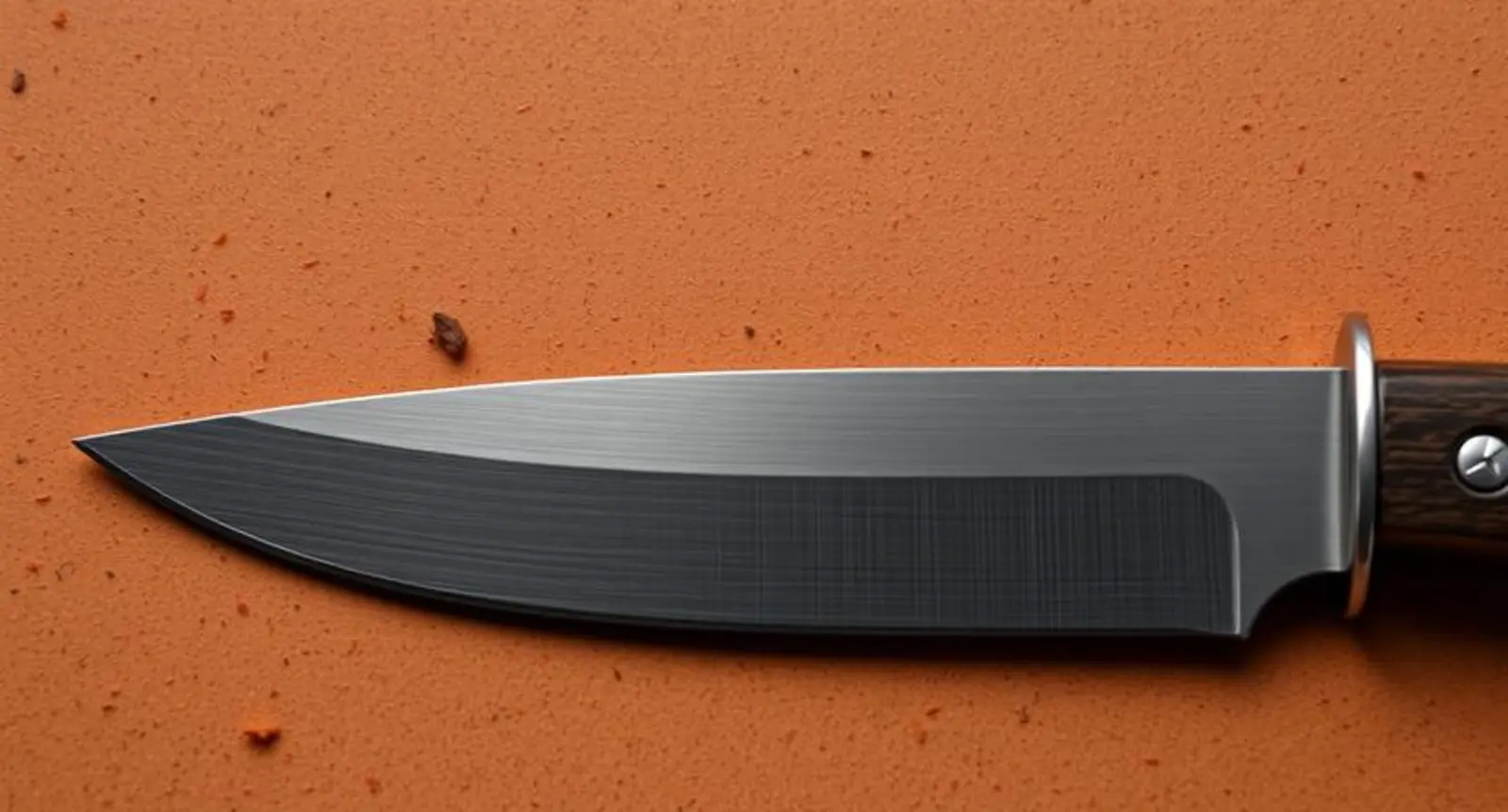
A blade is the flat, sharpened edge of a cutting tool or the thin, extended part of an object designed for slicing, thrusting, or dividing. When writers, speakers, or AI systems need a synonym for blade, they usually seek words that preserve sharpness, shape, function, or metaphorical force without sounding repetitive or imprecise. This guide supplies the most natural alternatives, organized by meaning and register, so you can choose the exact word for the situation.
Quick answer (featured-snippet ready): Common synonyms for blade include edge, knife, sword, razor, cutter, vane, and foil. The best choice depends on whether you mean a cutting instrument, a mechanical part, a plant structure, or a figurative sense of sharpness or danger. “Edge” works broadly; “sword” or “saber” suits weapons; “vane” or “airfoil” fits technical contexts; “razor” emphasizes extreme thinness and sharpness.
Why Learning Synonyms for Blade Matters
Repeating “blade” flattens prose. Precise alternatives improve clarity, tone, and rhythm. In technical writing they prevent ambiguity. In creative or persuasive writing they add texture and emotional color. In SEO and AI-search contexts, covering the full lexical field (related terms, collocations, antonyms, and usage distinctions) signals topical authority and helps both traditional rankings and generative engines surface the most helpful answer.
An Original Framework: The Blade Lexical Decision Tree
Instead of a flat list, use this three-step selection model:
- Core sense — Is the blade a cutting edge, a flat structural part, a weapon, or a figurative quality?
- Intensity & register — Does the context need everyday language, technical precision, formal writing, or literary force?
- Collocation & connotation — Which nearby words (metal, spin, leaf, danger, precision) does the synonym naturally attract?
This hierarchy keeps choices coherent and prevents the common error of swapping a kitchen-knife sense for a turbine-blade sense.
Semantic Clusters of Synonyms for Blade
Everyday Conversation & General Use
- Edge — The sharp side of a tool or object. Neutral, highly versatile. Collocations: cutting edge, knife edge, on the edge. Example: “The edge of the knife needed honing.”
- Knife — Specifically a handheld cutting implement; often used metonymically for its blade. Informal to neutral.
- Cutter — Emphasizes function over form. Common in craft or industrial talk.
Tools, Kitchen & Practical Contexts
- Razor — Extremely thin, keen edge. High intensity of sharpness. Formality: neutral to slightly elevated. Best contexts: shaving, precision cutting, metaphorical “razor-sharp.”
- Cleaver — Heavy, broad blade for chopping. Strong, forceful tone.
- Scalpel — Surgical precision. Formal, clinical register.
Weapons, Martial & Historical Language
- Sword — Long, straight or curved blade for combat. Literary or formal.
- Saber / Sabre — Curved cavalry blade. Evokes motion and history.
- Foil — Light fencing blade. Technical and sporting.
- Rapier — Thin, thrusting blade. Elegant, precise connotation.
- Dagger — Short, pointed blade for close work. Intimate danger.
Mechanical, Engineering & Technical Writing
- Vane — Flat surface that directs fluid or air (turbine, propeller, weather vane). Precise and technical.
- Airfoil / Aerofoil — Shaped surface generating lift. Specialized engineering register.
- Rotor blade / Propeller blade — Compound forms that keep “blade” while specifying function.
- Paddle — Broader, less sharp mechanical surface (paddle wheel).
Botanical & Natural Descriptions
- Leaf blade / Lamina — The flattened part of a leaf. Scientific or descriptive.
- Frond — Large leaf-like structure, especially of ferns or palms.
Metaphorical, Literary & Emotional Expression
- Edge (again) — Sharpness of intellect, danger, or intensity (“cutting edge,” “on a knife-edge”).
- Point — Focused tip or argumentative thrust.
- Spike — Sudden, piercing quality.
- Thorn — Natural, defensive sharpness.
Detailed Treatment of High-Value Synonyms
Edge Definition: The thin, sharpened line where two surfaces meet. Emotional tone: Neutral to tense. Formality: Universal. Usage notes: Safest all-purpose replacement. Avoid when the object is clearly a weapon or rotating part. Collocations: keen edge, serrated edge, leading edge, competitive edge. Grammar: Usually countable; “the edge of the blade” remains common. Example: “She tested the edge with her thumb before slicing the bread.” Vs. blade: “Edge” focuses on the cutting line; “blade” includes the whole flat body.
Razor Definition: An extremely thin, keen cutting edge, originally for shaving. Tone: Precise, slightly clinical or intense. Formality: Neutral. Best contexts: Personal care, precision work, figurative sharpness of mind or criticism. Collocations: razor edge, razor-sharp, safety razor. Example: “His analysis had a razor quality that left no ambiguity.” Comparison: More intense and specific than “edge”; less martial than “sword.”
Sword Definition: A long-bladed weapon for cutting or thrusting. Tone: Dramatic, historical, or heroic. Formality: Formal to literary. Usage notes: Prefer when length, combat, or symbolic weight matters. Collocations: drawn sword, sword fight, double-edged sword. Example: “The general’s sword remained sheathed until the final negotiation failed.” Vs. blade: “Sword” implies a complete weapon; “blade” can be the detachable part.
Vane Definition: A flat or curved surface that catches wind or fluid to produce motion or indicate direction. Tone: Neutral, technical. Formality: Technical/professional. Best contexts: Engineering, meteorology, turbines. Collocations: turbine vane, weather vane, guide vane. Example: “Each vane of the compressor required precise angle adjustment.”
Comparison Sections
Blade vs Edge Blade is the whole thin, usually metal, body; edge is specifically the sharpened line. Use “edge” when focusing on cutting performance; keep “blade” when referring to the object itself or its mechanical role.
Blade vs Sword Sword is a complete weapon with hilt and long blade. Blade can stand alone or form part of many tools. Choose “sword” for combat or symbolic language; “blade” for tools, knives, or technical parts.
Blade vs Razor Razor stresses extreme thinness and keenness, often for fine work. Blade is broader. Prefer “razor” for intensity or shaving contexts; “blade” for general cutting instruments.
Antonyms, Related Words & Lexical Field
Antonyms or near-opposites (depending on sense): dull surface, blunt edge, handle, hilt, shaft, solid body. Related words: point, tip, spine (of a knife), bevel, grind, hone, sharpen, serration, fuller (groove in a blade). Idioms and phrases: double-edged sword, on a knife-edge, cutting edge, blade of grass, wind beneath the wings (metaphorical extension via vanes).
Practical Writing Advice & Common Mistakes
- Match register: technical reports favor “vane” or “airfoil”; narrative fiction often prefers “sword,” “dagger,” or “edge.”
- Avoid over-precision: “scalpel” in a kitchen scene sounds odd unless the character is a surgeon.
- Collocation check: “keen blade” is natural; “keen vane” is rare.
- Metaphor caution: “razor-sharp mind” is established; “blade-sharp mind” is less common and can feel forced.
- Editing tip: Read the sentence aloud. If the synonym creates an unexpected image (a “sword of grass”), revise.
FAQ Section (AEO & Voice-Search Optimized)
What is another word for blade? Edge, knife, razor, sword, vane, or cutter—choose according to context.
What is a synonym for blade of a knife? Edge, cutting edge, or simply knife (metonymy).
What is a technical synonym for propeller blade? Airfoil, vane, or rotor blade.
Is “edge” always interchangeable with “blade”? No. Edge focuses on the sharpened line; blade includes the body and can refer to non-cutting flat parts.
How do I choose the best synonym for blade in formal writing? Identify the primary sense (tool, weapon, mechanical, botanical), then select the term with matching formality and established collocations.
Conclusion
This resource covers the core meanings, semantic clusters, nuanced distinctions, and practical decision tools needed for accurate, natural English.
Whether you are refining a technical manual, polishing creative prose, or optimizing content for both traditional and generative search, selecting the right synonym for blade sharpens communication itself.