
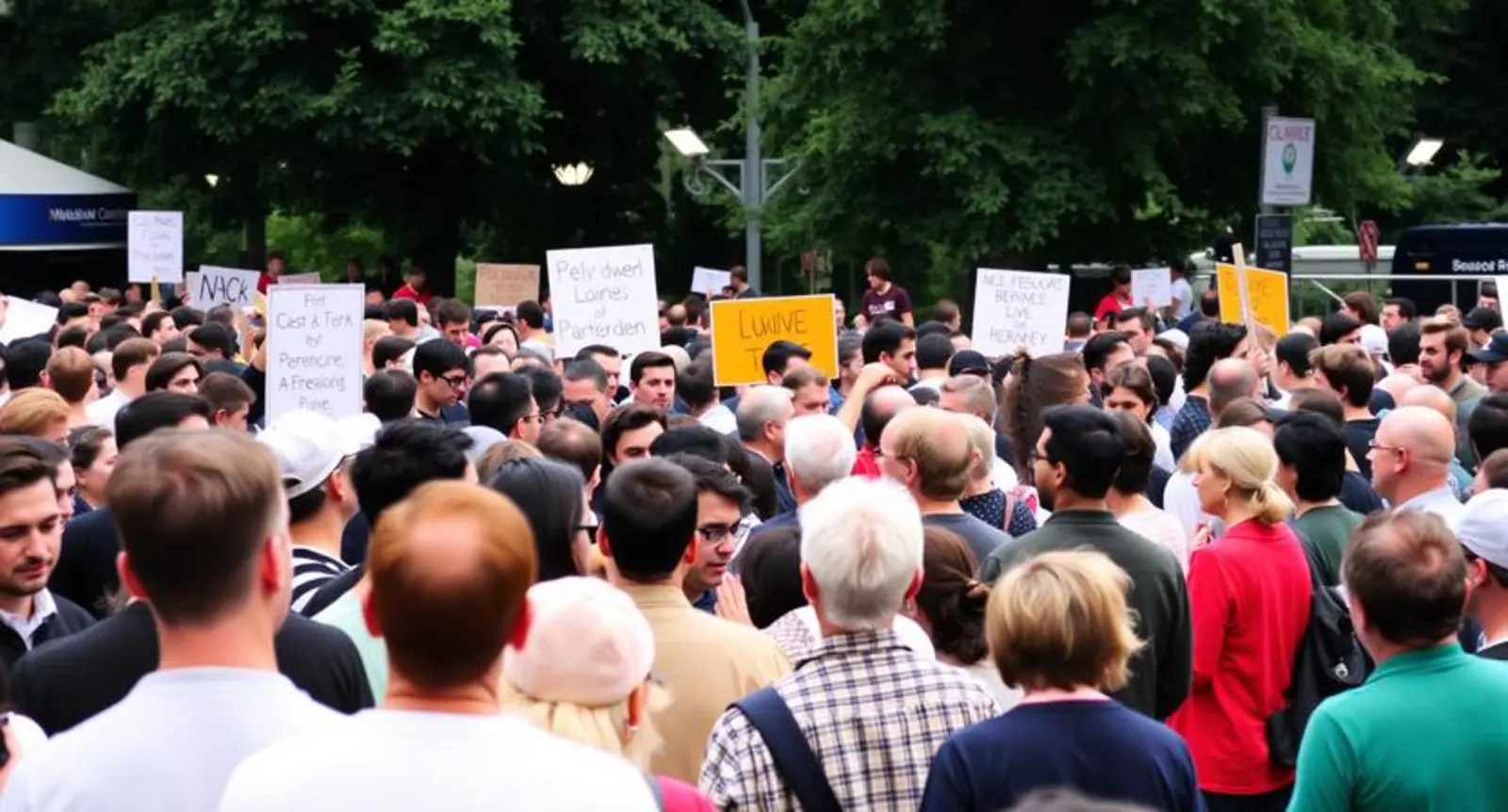
A congregate synonym is any word or phrase that expresses the idea of people, animals, or things coming together in one place.
Common synonyms include gather, assemble, meet, cluster, converge, unite, crowd, collect, flock, group, rally, and muster.
The best synonym depends on your context, formality, and the purpose of your writing.
What Does “Congregate” Mean?
The verb congregate means to come together in a group or gather in one place for a shared purpose, activity, or reason.
It commonly describes:
- People gathering
- Animals gathering
- Crowds forming
- Groups assembling
- Communities coming together
- Organizations meeting
Examples
- Students congregated outside the library.
- Birds congregate near the lake during winter.
- Thousands of fans congregated before the concert.
Although “congregate” is perfectly correct, it often sounds more formal than words like gather or meet.
Why Learn Synonyms for Congregate?
Using different synonyms helps you:
- Improve writing variety
- Avoid repetition
- Match the correct tone
- Sound more natural
- Increase vocabulary
- Write better emails
- Create stronger academic papers
- Produce engaging marketing copy
- Improve SEO content naturally
Professional writers rarely repeat congregate multiple times. Instead, they choose alternatives based on audience and context.
Featured Snippet: Best Synonyms for Congregate
| Synonym | Best Used For | Formality |
| Gather | Everyday writing | Neutral |
| Assemble | Meetings & organizations | Formal |
| Meet | General situations | Neutral |
| Cluster | Physical grouping | Neutral |
| Converge | Movement toward one place | Formal |
| Unite | Shared purpose | Formal |
| Crowd | Large groups | Informal |
| Collect | Objects or people gathering | Neutral |
| Rally | Support or motivation | Formal |
| Muster | Military or organized gathering | Formal |
| Group | General organization | Neutral |
| Flock | Birds or enthusiastic people | Informal |
The Congregate Vocabulary Framework
Instead of treating every synonym as identical, think of them on a Vocabulary Selection Ladder.
Level 1 — Everyday Language
These words are simple and natural.
- Gather
- Meet
- Group
- Join
- Come together
Perfect for:
- Conversations
- Blogs
- Social media
- Everyday emails
Level 2 — Professional Language
These fit workplaces.
- Assemble
- Convene
- Unite
- Rally
- Collect
Ideal for:
- Reports
- Business writing
- Presentations
- Corporate communication
Level 3 — Academic & Formal Writing
More sophisticated vocabulary.
- Congregate
- Converge
- Muster
- Aggregate
- Coalesce
Suitable for:
- Research papers
- Formal essays
- Government documents
- Academic publications
Synonym Cluster 1: Everyday Conversation
Gather
Meaning
To come together in one place.
Emotional Tone
Neutral
Formality
Neutral
Best Contexts
- Friends
- Family
- Schools
- Communities
Common Collocations
- gather together
- gather around
- gather outside
- gather information
- gather everyone
Example
Everyone gathered around the campfire.
Why Choose “Gather”?
This is the safest replacement for congregate in almost every situation.
Meet
Meaning
To come together intentionally.
Tone
Friendly
Best Contexts
- Friends
- Work
- Appointments
- Teams
Examples
Let’s meet after lunch.
The committee met yesterday.
Difference from Congregate
“Meet” usually involves a planned event, while “congregate” often describes many people naturally coming together.
Join
Meaning
To become part of a group.
Best Contexts
- Clubs
- Activities
- Organizations
Example:
She joined the crowd outside.
Synonym Cluster 2: Professional & Business Communication
Assemble
Meaning
To bring people together in an organized manner.
Tone
Professional
Common Collocations
- assemble the team
- assemble the committee
- assemble participants
- assemble employees
Examples
The manager assembled the staff before the presentation.
Best For
- Business meetings
- Conferences
- Training sessions
Convene
Meaning
To officially gather a meeting.
Tone
Very formal
Examples
The board convened to discuss the proposal.
Common Uses
- Government
- Universities
- Courts
- Corporate boards
Rally
Meaning
To bring people together for support or action.
Emotional Tone
Motivational
Examples
The leader rallied the volunteers.
Synonym Cluster 3: Academic Writing
Converge
Meaning
To move toward the same place or point.
Best Contexts
- Science
- Geography
- Sociology
- Technology
Examples
Experts converged at the annual conference.
Roads converge near the city center.
Coalesce
Meaning
Separate groups become one.
Tone
Highly formal
Example
The smaller organizations coalesced into a single alliance.
Aggregate
Meaning
To combine into a larger whole.
Example
The data were aggregated before analysis.
Although related, this word usually applies to information, statistics, or resources, not people.
Synonym Cluster 4: Crowds and Public Gatherings
Crowd
Meaning
Large numbers of people gathering closely.
Example
Fans crowded around the stadium entrance.
Cluster
Meaning
To gather in a small close group.
Example
Children clustered around the teacher.
Flock
Meaning
People or animals moving together enthusiastically.
Example
Tourists flock to the beach every summer.
Swarm
Meaning
A large moving group.
Often used for:
- Bees
- Insects
- Crowds (figuratively)
Example
Fans swarmed the stage after the performance.
Synonym Cluster 5: Leadership and Team Communication
Unite
Meaning
To bring people together around a common purpose.
Best Contexts
- Leadership
- Community building
- Teamwork
- Politics
Example
The campaign united volunteers across the country.
Muster
Meaning
To gather people formally.
Often used in:
- Military
- Emergency response
- Historical writing
Example
The captain mustered the troops before sunrise.
Mobilize
Meaning
To organize people for action.
Example
The charity mobilized hundreds of volunteers.
Congregate Synonym Decision Matrix
| If You Want To Say… | Best Word |
| Friends coming together | Gather |
| Employees meeting | Assemble |
| Official meeting | Convene |
| Birds together | Flock |
| Roads meeting | Converge |
| Small groups | Cluster |
| Volunteers joining | Rally |
| Military gathering | Muster |
| Supporters joining | Unite |
| Huge public crowd | Crowd |
Congregate vs Gather
Many writers treat these as identical, but there are subtle differences.
| Congregate | Gather |
| More formal | More natural |
| Often larger groups | Any size group |
| Often spontaneous | Planned or unplanned |
| Academic writing | Everyday English |
| Religious or public settings | Any setting |
Examples
People congregated outside the courthouse.
Friends gathered at the café.
Gather is the better choice in everyday communication, while congregate works well in formal, academic, or descriptive writing.
Congregate vs Assemble
Although both words describe people coming together, they are not always interchangeable.
| Congregate | Assemble |
| People naturally gather | People are intentionally brought together |
| Often spontaneous | Usually organized |
| Common in public places | Common in workplaces |
| Neutral action | Suggests planning or authority |
Examples
- Visitors congregated near the museum entrance.
- The manager assembled the project team for a briefing.
Writing Tip: Use assemble when someone organizes the gathering. Use congregate when people come together on their own.
Congregate vs Converge
These words are closely related but emphasize different actions.
| Congregate | Converge |
| Focuses on being together | Focuses on moving toward one point |
| Describes the final gathering | Highlights the movement |
| Used for people and animals | Used for people, roads, ideas, trends, and data |
Examples
- Protesters congregated in the city square.
- Delegates converged on the conference center from around the world.
Best Choice: If movement is the key idea, choose converge. If the gathering itself matters, choose congregate.
Congregate vs Unite
Although both involve groups, they express different meanings.
| Congregate | Unite |
| Gather physically | Join around a shared goal or belief |
| Temporary action | Often long-term cooperation |
| Focus on location | Focus on purpose |
Examples
- Residents congregated in the community hall.
- Residents united to improve neighborhood safety.
Antonyms of Congregate
Sometimes you need the opposite meaning. These antonyms describe people or things moving apart rather than together.
| Antonym | Meaning |
| Disperse | Scatter in different directions |
| Separate | Move apart |
| Divide | Split into groups |
| Scatter | Spread over an area |
| Dissolve | Break up a gathering |
| Depart | Leave a place |
| Disband | End an organized group |
| Isolate | Keep apart |
| Withdraw | Move away |
| Evacuate | Leave an area |
Examples
- After the speech, the crowd dispersed.
- The meeting ended, and everyone departed.
Related Words and Expressions
These words are semantically related to congregate and enrich your vocabulary.
Nouns
- Gathering
- Assembly
- Meeting
- Crowd
- Congregation
- Group
- Audience
- Community
- Coalition
- Union
- Convention
- Forum
Verbs
- Gather
- Assemble
- Convene
- Rally
- Unite
- Cluster
- Collect
- Meet
- Merge
- Combine
- Join
- Coalesce
Adjectives
- Collective
- United
- Communal
- Organized
- Social
- Collaborative
- Connected
- Unified
Common Collocations with Congregate
Native speakers often use congregate with certain words.
People
- congregate outside
- congregate together
- congregate peacefully
- congregate in groups
- congregate near the entrance
Places
- congregate in parks
- congregate at schools
- congregate around the stage
- congregate near the river
- congregate in public spaces
Events
- congregate for celebrations
- congregate during festivals
- congregate before concerts
- congregate after services
- congregate during emergencies
Grammar Tips
Verb Forms
| Form | Example |
| Base | congregate |
| Third person | congregates |
| Past | congregated |
| Past participle | congregated |
| Present participle | congregating |
Examples
- People congregate here every evening.
- Visitors congregated around the monument.
- Crowds are congregating outside the stadium.
Pronunciation
Congregate
IPA (UK): /ˈkɒŋ.ɡrɪ.ɡeɪt/
IPA (US): /ˈkɑːŋ.ɡrə.ɡeɪt/
Syllables: con-gre-gate
Stress: First syllable (CON-gre-gate)
Common Mistakes to Avoid
1. Using Congregate for Objects
❌ The books congregated on the shelf.
✅ The books were grouped on the shelf.
Objects generally do not “congregate” because the word usually implies voluntary gathering.
2. Confusing Congregate with Congregation
- Congregate = verb
- Congregation = noun
Correct:
- People congregated after the ceremony.
- The congregation welcomed new members.
3. Choosing an Overly Formal Word
For everyday writing:
Instead of:
“The children congregated near the playground.”
You can simply write:
“The children gathered near the playground.”
It sounds more natural.
Context Selection Matrix
| Situation | Best Synonym |
| Casual conversation | Gather |
| School essay | Congregate |
| Business meeting | Assemble |
| Academic journal | Converge |
| Political speech | Unite |
| Marketing campaign | Rally |
| Community event | Gather |
| Religious setting | Congregate |
| Military context | Muster |
| Nature writing | Flock |
Vocabulary Ladder
Use this progression to expand your vocabulary naturally.
Beginner
- Meet
- Join
- Gather
Intermediate
- Assemble
- Cluster
- Crowd
- Collect
Advanced
- Congregate
- Converge
- Convene
- Coalesce
- Muster
- Aggregate
Writing Advice: How to Choose the Best Synonym
Ask yourself these questions before replacing congregate:
Is the tone casual?
Choose:
- Gather
- Meet
- Join
Is the tone professional?
Choose:
- Assemble
- Convene
- Unite
Is the writing academic?
Choose:
- Congregate
- Converge
- Coalesce
Is movement important?
Choose:
- Converge
Is teamwork important?
Choose:
- Unite
Is enthusiasm important?
Choose:
- Rally
- Flock
Professional Editing Tips
Editors often improve readability by varying repeated words.
Instead of:
People congregated outside. More people congregated later. Hundreds congregated during the evening.
Write:
People gathered outside. More visitors arrived later. Hundreds assembled during the evening.
This variation sounds more engaging and natural while avoiding unnecessary repetition.
Real-World Examples
Business
Employees assembled for the quarterly meeting.
Education
Students gathered in the auditorium before graduation.
Journalism
Thousands of supporters congregated in the capital.
Sports
Fans flocked to the stadium hours before kickoff.
Emergency Response
Rescue workers converged on the affected area.
Community
Neighbors united to organize a charity fundraiser.
Frequently Asked Questions (FAQ)
What is the best synonym for congregate?
The best all-purpose synonym is gather. It is natural, versatile, and suitable for most everyday situations.
Is assemble the same as congregate?
Not exactly. Assemble implies an organized or planned gathering, while congregate often describes people coming together naturally.
Can congregate describe animals?
Yes. It commonly refers to animals gathering in one place.
Example: Whales congregate in warm waters during migration.
Is congregate a formal word?
Yes. It is more formal than gather, which is why it appears frequently in academic, journalistic, legal, and official writing.
What is the opposite of congregate?
Common antonyms include:
- Disperse
- Scatter
- Separate
- Divide
- Disband
- Depart
Which synonym is best for business writing?
Professional options include:
- Assemble
- Convene
- Unite
- Rally
These words sound polished and appropriate in workplace communication.
Final Thoughts
Understanding a congregate synonym is about more than memorizing a list of alternatives—it’s about selecting the word that best matches your audience, tone, and purpose.
While gather is the most versatile everyday choice, assemble works well in professional settings, converge emphasizes movement toward a common point, unite highlights shared purpose, and congregate remains an excellent option for formal, academic, journalistic, and descriptive writing.
Expanding your vocabulary with context-aware synonyms helps you write with greater precision, avoid repetition, and communicate more effectively.
By considering formality, emotional tone, collocations, and real-world usage, you can confidently choose the most natural word for any situation. Whether you’re writing an essay, business report, blog post, speech, or creative story, mastering these nuanced alternatives will make your English clearer, richer, and more engaging.

“Michael Anderson is a digital marketing and SEO specialist who writes about branding, advertising strategy, and content marketing to help businesses grow online.”