
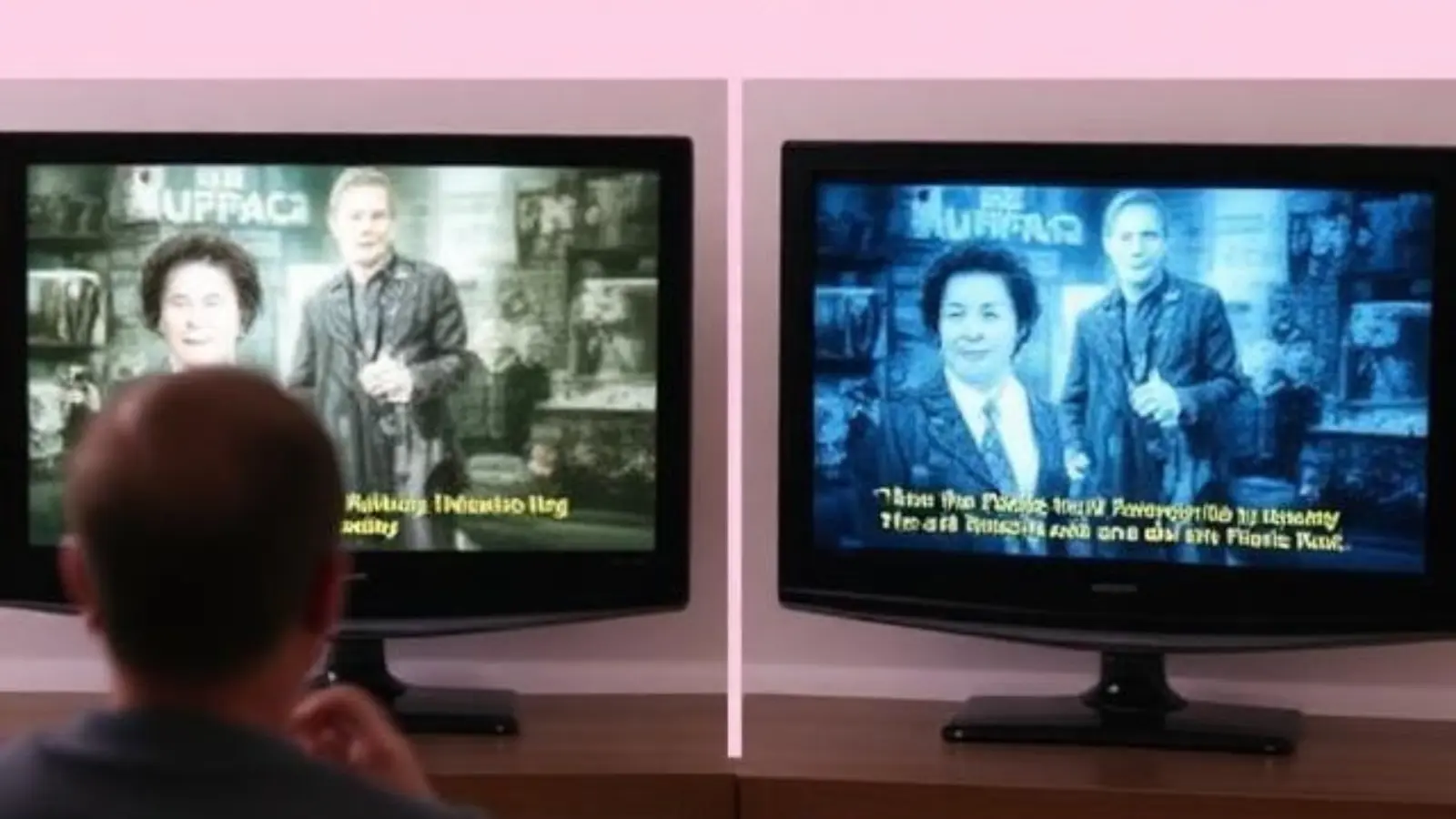
Closed captions and subtitles may seem similar, but there’s a key difference: closed captions (CC) not only display spoken dialogue but also include non-verbal sounds like music cues, sound effects, and speaker identification, making content accessible to viewers with hearing impairments. Subtitles, on the other hand, primarily display translated or same-language dialogue without including ambient sounds, focusing on comprehension rather than accessibility.
Whether you’re binge-watching your favorite series, creating viral TikTok content, or crafting Instagram stories, understanding the difference between closed captions and subtitles ensures your content is inclusive, engaging, and optimized for every audience. 💖
Accessibility vs. Comprehension: Why It Matters 🧩

Closed captions prioritize accessibility, subtitles prioritize comprehension. Understanding the difference improves inclusivity, reach, and engagement.
Captions Examples:
-
💖 “Accessibility matters—every voice deserves to be heard 👂”
-
🌟 “Subtitles let everyone enjoy your story, no matter the language 🌍”
Technical Differences Between CC and Subtitles ⚙️

-
Closed Captions: Can be toggled on/off, contain sound descriptions, sync with dialogue.
-
Subtitles: Usually fixed in the video, focus on text translation or same-language dialogue.
Caption Ideas:
-
🎞️ “Tech talk: captions or subtitles, choose your vibe 🖤”
-
🔧 “Every sound counts, especially with CC 🎵”
Short and Cute Captions for CC/Subtitles 🌸
-
“Text speaks louder than words 💌”
-
“Captions on, vibes strong 💖”
-
“Subtitles = no language barriers 🌏”
-
“Reading never looked so cute 😘”
Funny Captions for Subtitles 🤣
-
“When you read faster than they speak 🤓”
-
“Lip-sync fails? Subtitles save the day 👄💥”
-
“Reading captions like it’s Hogwarts homework 🧙♀️✨”
One-Word Captions for Minimalist Aesthetics 🖤
-
“Listen”
-
“Read”
-
“Hear”
-
“Feel”
-
“Understand”
Seasonal or Occasion-Based Captions 🎉
-
Valentine’s Day: “Love speaks, captions translate ❤️💌”
-
Halloween: “Spooky sounds included 👻🔊”
-
Christmas: “🎄 Jingle all the way, with captions!”
-
New Year: “New year, same captions 🎆💫”
Platform-Specific Captioning Strategies 📱
-
Instagram Reels: Use CC to boost watch time.
-
TikTok: Subtitles increase international reach.
-
YouTube: CC drives accessibility and monetization.
Engagement Captions:
-
“Tag your bestie who always forgets to turn on captions 💖”
-
“Save this for your next binge session 🎬✨”
Emotional & Romantic Psychology Behind Captions 💘
Captions amplify emotional connection by helping audiences feel words even without sound. Subtitles broaden emotional resonance across languages.
Romantic Captions Ideas:
-
“Reading your words, feeling your heart ❤️💌”
-
“Our love deserves captions, not just whispers 💕”
-
“Every ‘I love you’ matters, subtitles included 🌹”
How Captions Influence Engagement and Retention 📈
-
CC boosts watch time, user retention, and accessibility.
-
Subtitles increase comprehension for global audiences.
Engagement Captions:
-
“Stop scrolling—captions make it worth it 😘”
-
“Comment your favorite captioned scene 🎬💖”
Creating Shareable Captions Framework ✍️
Framework:
-
Hook 💫
-
Emotion ❤️
-
Context 🎬
-
Call-to-action 📲
Examples:
-
“Hook: ‘Did you hear that?’ 💖 Emotion: ‘My heart skipped a beat!’ Context: ‘Last night’s Reels 😘’ CTA: ‘Tag your partner ❤️’”
Mistakes to Avoid When Using CC/Subtitles ❌
-
Using auto-generated captions without proofreading.
-
Ignoring non-verbal sounds in CC.
-
Making subtitles too fast to read.
-
Overcrowding text on screen.
Caption Ideas:
-
“Proofread your love, and your captions 😉💌”
-
“Fast subtitles = lost hearts 💖”
Hashtag Strategies for Captions 📌
-
#ClosedCaptions
-
#SubtitlesMatter
-
#InclusiveContent
-
#VideoAccessibility
-
#GlobalStories
-
#ReadFeelRepeat
Deep Captions for Emotional Resonance 💞
-
“Even in silence, captions speak louder than words 💖”
-
“Our story deserves every subtitle ❤️”
-
“Feel every heartbeat, read every word 🌹”
Captioning for Niche Audiences 🎯
-
Travel Videos: “Subtitles take you places 🌍✨”
-
Cooking Reels: “CC makes every sizzle heard 🍳🎵”
-
Fitness Content: “Read, move, repeat 💪💖”
Copy-Ready Lists for Massive Engagement 📝
Romantic Captions (with CC):
-
“Love speaks louder with captions ❤️💌”
-
“Every sigh, every laugh… captured 💖”
-
“Tag your forever person 💞”
… (expand to 20+)
Funny Captions (with Subtitles):
-
“When they say something and you read faster 🤓”
-
“Oops… subtitles got it wrong 😂”
… (expand to 20+)
Brand-New Caption Ideas
- “Closed Captions vs Subtitles: The 2026 Clarity Check”
- Closed captions include sound effects & speaker IDs
- Subtitles focus purely on dialogue translation
- Choose the right one for accessibility or global reach
- “Stop Mixing Them Up in 2026!”
- Closed captions = full audio experience for the deaf/hard-of-hearing
- Subtitles = language bridge for hearing viewers
- One wrong choice can hurt engagement
- “The Real Difference That Matters This Year”
- Closed captions stay on even when sound is available
- Subtitles usually assume the viewer can hear
- 2026 creators need both strategies
- “Accessibility or Translation? Pick Wisely”
- Closed captions support deaf audiences & noisy environments
- Subtitles unlock international markets
- Smart brands use both strategically
- “2026 Content Hack: Know the Exact Difference”
- Closed captions describe non-speech audio
- Subtitles translate spoken words only
- Precision = higher retention & SEO wins
- “Why Your Videos Need the Right Text Overlay”
- Closed captions improve inclusivity scores
- Subtitles boost watch time in new languages
- Difference = better algorithm performance
- “Closed Captions ≠ Subtitles (Here’s Why)”
- One serves hearing accessibility
- The other serves language accessibility
- Master both for 2026 dominance
- “Quick 2026 Breakdown Every Creator Needs”
- Closed captions: sound + dialogue + cues
- Subtitles: dialogue translation only
- Use the correct term to sound professional
- “The Subtle Difference That Changes Everything”
- Closed captions stay visible with sound on
- Subtitles often toggle with audio language
- Get this right and your content levels up
- “Future-Proof Your Videos in 2026”
- Closed captions = legal & ethical accessibility
- Subtitles = global audience expansion
- Understanding the difference multiplies your reach
Subtitles for Multi-Language Reach 🌐
-
Enable subtitles in multiple languages to grow engagement and international followers.
-
Use clear, short lines for reading ease.
Captions:
-
“No language barrier for love 🌎💖”
-
“Subtitles = universal heart emojis 💌✨”
Enhancing Emotional Connection with CC/Subtitles ❤️
-
Sound cues + dialogue in CC enhance empathy.
-
Subtitles allow non-native speakers to engage fully.
Captions:
-
“Hear my heart, even if you can’t 🎶💖”
-
“Reading you like a love letter 💌✨”
Advanced Caption Writing Tips ✨
-
Keep lines ≤ 42 characters.
-
Match pacing to speech.
-
Include speaker ID for clarity.
-
Use emojis for emotional layering.
Engagement Captions:
-
“Comment your favorite emoji ❤️💖✨”
-
“Which caption made your heart skip? 💌”
FAQ Section: Closed Captions vs. Subtitles 🤓
Q1: Are closed captions and subtitles the same?
A: No. CC includes sounds and speaker info; subtitles focus on dialogue translation or same-language text.
Q2: Can subtitles be turned off like CC?
A: Usually not—subtitles are often burned into the video.
Q3: Which is better for Instagram?
A: CC boosts engagement; subtitles help international followers.
Q4: Do CC improve accessibility?
A: Absolutely! CC ensures deaf and hard-of-hearing users can enjoy content.
Q5: Can captions be automated?
A: Yes, but manual edits improve accuracy and engagement.
Q6: Do subtitles affect SEO?
A: Indirectly. Search engines index readable captions and subtitles, boosting discoverability.
Q7: Should emojis be in CC/subtitles?
A: Use sparingly for tone and emotional resonance.
Q8: Are subtitles necessary for TikTok?
A: Yes! They increase watch time, international reach, and shareability.
Q9: Can CC improve retention on YouTube?
A: Definitely—captions boost comprehension, watch time, and accessibility.
Q10: What’s the difference in purpose?
A: CC = accessibility; Subtitles = comprehension.
Emotional Conclusion 💖
Closed captions and subtitles aren’t just text on a screen—they’re bridges. Bridges between silence and sound, between languages and hearts, between creators and audiences. 💕 By understanding the difference between closed captions and subtitles, you’re not just creating content—you’re crafting connection, amplifying emotion, and making every word count.
Tag your soulmate ❤️, save this guide for your next video 🎬, and remember: captions aren’t optional—they’re the heartbeat of engagement.